


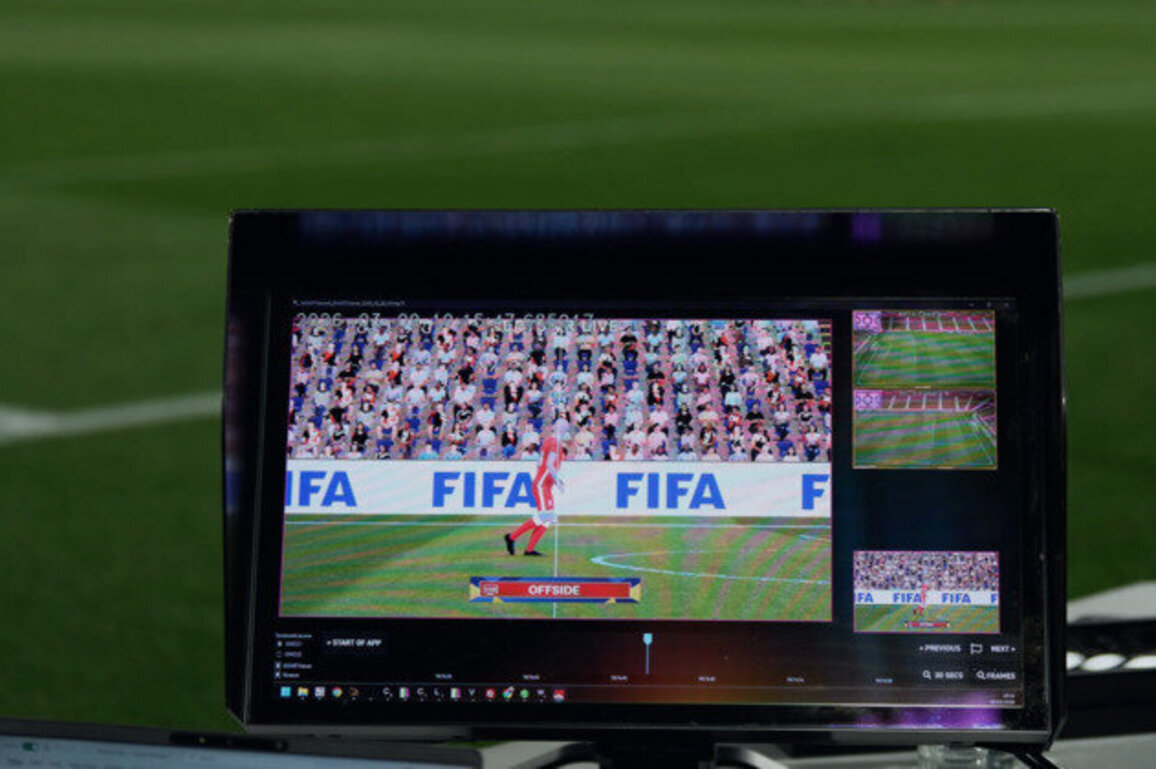
DALLAS, 4th June, 2026 (WAM) -- FIFA has announced a series of technological innovations for the FIFA World Cup 2026, which will be hosted by Canada, Mexico and the United States from 11th June to 19th July, aimed at improving officiating accuracy, enhancing performance analysis and enriching the fan experience.
Johannes Holzmller, FIFA Director of Innovation, outlined the key innovations during a virtual media round table held yesterday from the International Broadcast Centre (IBC) in Dallas.
Among the most significant developments is the introduction of Advanced Semi-Automated Offside Technology, which will feature at the FIFA World Cup for the first time.
Holzmller explained that the technology will allow clear offsides to be sent directly to match officials on the pitch, rather than to the video assistant referee (VAR), enabling assistant referees to signal positional offsides more quickly. The system remains limited to positional offside decisions and will not determine interference in play.
To further enhance accuracy, every participating player at the FIFA World Cup 2026 will be 3D-scanned, with their images and digital avatars incorporated into the Semi-Automated Offside Technology system. This will not only support officiating decisions but also improve the quality of broadcast 3D replays.
FIFA also announced the launch of Football AI Pro, a generative AI knowledge assistant designed to provide all 48 participating teams with equal access to advanced pre- and post-match analytical capabilities.
Holzmller said the new system will make it easier for teams to extract the information they need from match data and help democratise access to advanced football analytics, regardless of a team's resources or staffing levels.
He also highlighted developments to referee body cameras, which were first tested at the FIFA Club World Cup 2025. The upgraded technology reduces motion blur caused by rapid movement and provides higher-quality first-person footage, enhancing transparency, understanding and engagement for audiences.
The tournament will also utilise 16 optical tracking cameras in each stadium, generating more than 150 million tracking data points per match. The system enables FIFA to recreate entire matches in 3D, support VAR decision-making, provide enhanced content for media partners and serve as the foundation for Football AI Pro's 3D recreations.