


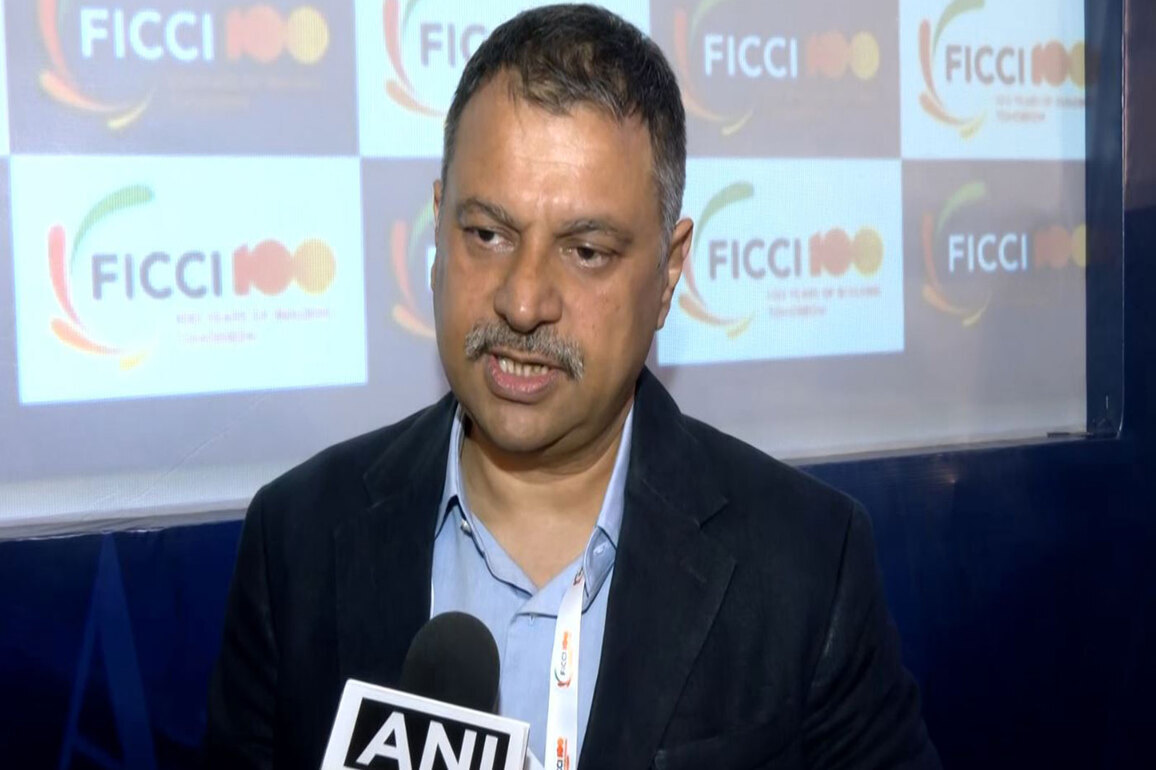
New Delhi [India], June 4 (ANI): Digital fraud has evolved from isolated cases of forgery and fake signatures into a highly organised, cross-border criminal enterprise, with cybercrime networks operating through dedicated compounds in countries such as Cambodia, Laos and Myanmar, Maharashtra Principal Secretary Brijesh Singh said on Thursday.
Speaking to ANI on the sidelines of the FICCI Conference on Next-Gen Forensics, Singh said the nature of financial and cyber fraud has changed significantly, requiring new investigative and forensic capabilities.
'Digital frauds have changed. Earlier, people used to do cheque forgeries or fake signatures and things like that. Today it's all digital, and you see a rapid development of deception and industrialised deception,' Singh said.
Referring to the rise in cyber fraud cases, including so-called 'digital arrest' scams, he said criminal operations have become highly structured and international in nature.
'You have an entire machinery which has been created to defraud people. It operates in a very modular way, and it's across nations. It's in Cambodia, Laos and Myanmar where there are organised cybercrime compounds,' he said.
Singh said the changing nature of cybercrime has also transformed the kind of evidence investigators rely on during forensic examinations.
'Earlier it used to be hard disks and devices, but today it's more of logs and artifacts in memory and crypto transactions and stuff like that,' he said.
He noted that conferences such as the FICCI event are important for creating awareness about emerging forensic technologies and investigative tools needed to tackle modern cybercrime.
On India's preparedness to deal with new-age digital frauds, Singh said institutions have strengthened their defences alongside the rapid growth of the country's digital public infrastructure.
'If you look at the digital public infrastructure which India has created and look at UPI, the transactions are probably more than the GDP of Australia and Mexico put together. Even this huge infrastructure is being protected very well because there are going to be attacks on this; criminals are going to come behind the money,' he said.
According to Singh, India has introduced multiple legal and institutional mechanisms to address evolving cyber threats.
'The whole new Indian criminal jurisprudence has changed where digital evidence is now recognised as primary,' he said.
He added that several agencies, including the Indian Cyber Crime Coordination Centre (I4C), state cybercrime cells, and critical information infrastructure protection bodies, are working together to counter cyber fraud.
'Everywhere people are very in tune with the latest modus operandi of these fraudsters and adequate measures are being taken,' Singh said. (ANI)