


WASHINGTON (CN) - As Democrats weigh how to respond to President Donald Trump's escalating war on Iran, Connecticut Senator Chris Murphy on Monday called on colleagues to seize the moment and reassert Congress' power to authorize military action.
And while he said he supported a push by other lawmakers to leverage the war powers resolution to nullify hostilities against Tehran, the senior Senate Democrat cautioned that the failure of such a measure could give the Trump administration "political cover" to continue the campaign without explicit congressional approval.
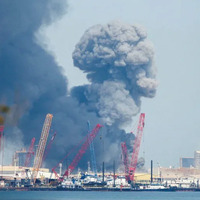
Trump over the weekend announced U.S. forces had begun a major bombing campaign against Iran. In a series of strikes coordinated with Israel, American jets and cruise missiles have targeted military and nuclear infrastructure across the country. The operation has also killed Iran's supreme leader, Ayatollah Ali Khamenei, and several senior regime figures.
The White House and Pentagon have repeatedly referred to the military campaign in Iran as a "war," though Congress has not approved a declaration of war or an authorization for use of military force, often abbreviated as AUMF.
Given the lack of explicit authorization from Capitol Hill, Democratic lawmakers have insisted that the administration acted illegally when it began striking Iran.
Virginia Senator Tim Kaine, who previously led efforts to block the Trump administration from taking military action against Venezuela, called on Senate leadership to immediately call lawmakers back to Washington and move a bill to halt hostilities against Iran.
"Have we learned nothing - absolutely nothing - after 25 years of unproductive wars in the Middle East?" Kaine said in a video message posted to social media Saturday. "Virginians don't want it, Americans don't want it and I'm hoping my congressional colleagues will listen to their constituents instead of being buffaloed by a warmongering president."
Under the 1973 War Powers Resolution, Congress has the authority to halt military action taken by the White House. But lawmakers have used that power sparingly, and the Senate in January narrowly defeated Kaine's effort to block Trump from taking further military action against Venezuela after the U.S. capture of Venezuelan President Nicolas Maduro.
And now, Murphy has warned that a similar resolution aimed at the war in Iran could backfire for Democrats.
"If a war powers resolution becomes the way we debate war, then the burden is forever shifted," the Connecticut senator wrote in a lengthy post on X Monday afternoon. "Instead of the president seeking approval before starting war, the opponents need to muster the votes to stop it. That's not how our founders designed it."
Though he pointed out he was a cosponsor of Kaine's war powers resolution and he supported the effort, Murphy contended the measure would "likely" fail in the Senate - and even if Congress managed to approve it, Trump would refuse to sign the resolution and render it symbolic. The president, the senator argued, would claim that he had congressional support to continue his campaign in Iran.
"This gives Trump political cover and sets a dangerous precedent going forward," said Murphy.
Instead, the Connecticut Democrat called on his colleagues to insist the Senate vote on an AUMF, which he framed as an assertion of congressional power over warmaking. He argued that Trump has avoided approaching Congress for such authorization because he would fail to achieve the necessary support and face "tough questions" from lawmakers about the cost, timelines and goals of the war against Iran.
Murphy added that Democrats should resolve to block other legislation in the upper chamber until Republican leaders agree to vote on an AUMF bill.
Democratic leadership, however, has not publicly endorsed any effort to pass a formal authorization of military force against Tehran. In a statement on Saturday, Senate Minority Leader Chuck Schumer backed Kaine's call to hold a vote on a war powers resolution.
"The administration has not provided Congress and the American people with critical details about the scope and immediacy of the threat," said the top Senate Democrat. "Unfortunately, President Trump's fitful cycles of lashing out and risking wider conflict are not a viable strategy."
And Senate Republicans have largely offered full-throated endorsements of Trump's Iran strikes.
Speaking on the Senate floor Monday, Senate Majority Leader John Thune said it was "clear that Iran poses a serious risk" to U.S. national security interests.
"President Trump and his administration relentlessly pursued a diplomatic solution to the threat posed by Iran, but the Iranian regime refused diplomatic offramps," said Thune. "So now, the president is taking action."
The Trump administration has provided few precise details about its end goal in striking Iran, or how long it expects the military to be engaged in hostilities.
But the White House, which claimed over the weekend that Tehran refused diplomatic overtures to halt its nuclear program and that the regime was building up conventional forces capable of striking key U.S. interests, has said it hopes to destroy Iran's missile infrastructure, scuttle its naval forces and stem its ability to construct nuclear weapons.
The Trump administration last year conducted limited strikes against Iran's Fordow nuclear facility, attacks the president claimed at the time "obliterated" the regime's ability to enrich weapons-grade uranium.
In a news conference at the Pentagon Monday morning, Defense Secretary Pete Hegseth told reporters that Iran had "an ability to project power against us and our allies in ways that we can't tolerate," including ballistic missile and drone capabilities.
The defense secretary also refused to rule out a potential ground invasion of Iran by U.S. forces, saying instead that the Pentagon would not share its plans with members of the media.
"Going forward, why in the world would we tell you ... what we will or will not do in pursuit of an objective?" said Hegseth.
And Trump, during a ceremony for Medal of Honor recipients he announced during last week's State of the Union address, left the door open for an extended military campaign against Iran, saying that the operation was proceeding "ahead of our time projections" but that hostilities may continue for as long as five weeks.
"We have the capability to go far longer than that," said the president. "We'll do it."
The war powers resolution allows the executive branch to commit troops to combat for no longer than 60 days without formal approval from Congress. It's unclear whether the Trump administration's war in Iran will continue past that threshold or whether the president will seek such authorization.
Source: Courthouse News Service