


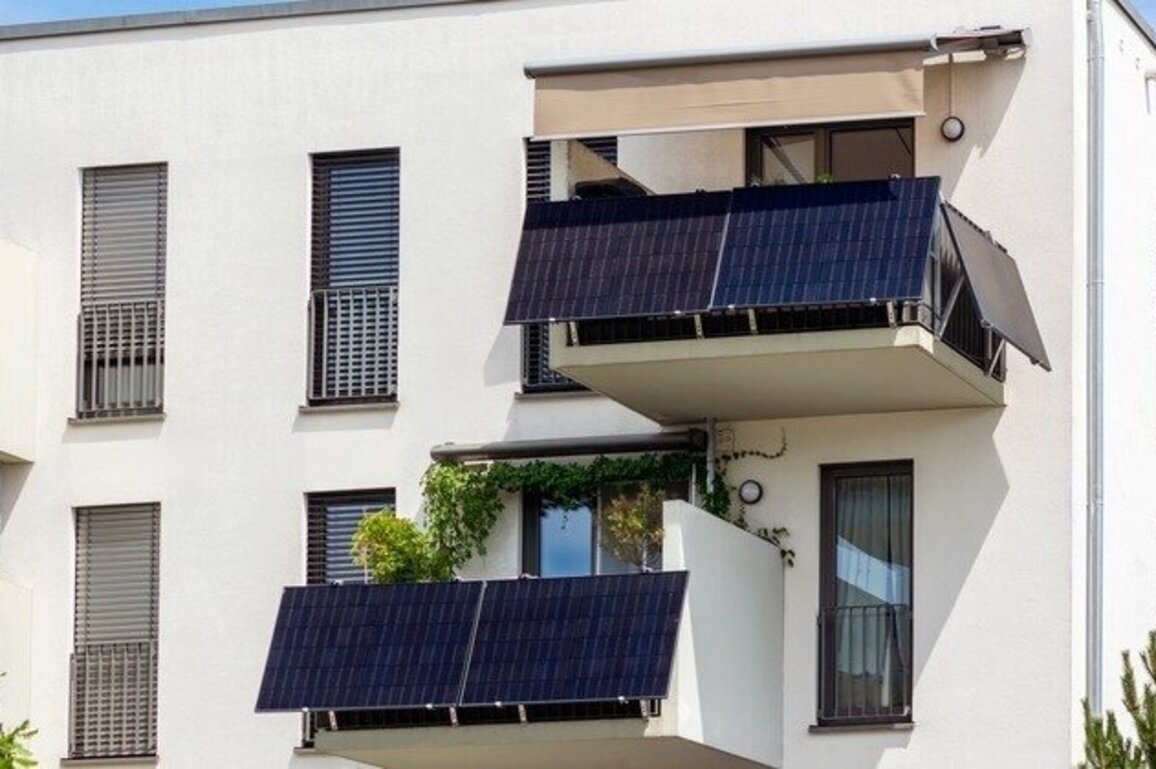
A new Connecticut bill would create clear regulations on plug-in solar.
Also known as balcony solar, these smaller panels allow people living in apartments to generate solar power. House Bill 5340 would allow customers to use plug-in solar with an output of up to 1,200 watts without approval from their local electric utility.
Connor Yakitis, deputy director of the Connecticut League of Conservation Voters, said this is an affordable way for people to invest in clean energy.
"Allowing people to have even a little bit of solar on your balcony gets people in the mindset of thinking about the energy that they produce," he said, "but also the energy that they consume."
The bill received overwhelming support at a public hearing, with some opposition from farmers worried about utility-scale solar encroaching on their land. Plug-in solar is just one part of this bill, which also renews various incentives for residential, community and commercial solar programs.
One thing environmental advocates such as Yakitis want to ensure is that the bill language doesn’t change. There are talks of capping how much energy can be generated from and how much money can be invested in solar programs. He said this is a problem.
"If we put any sort of cap on that program, it basically says you could get to July of next year, and we've hit that cap," he said. "That means no one else is incentivized to do solar. So that's a huge problem. We don't want to kill a growing industry here in Connecticut. We don't want developers to have uncertainty on any level."
A Connecticut Clean Energy Industry report finds the renewable-energy economy generated about $7 billion for the state in 2024. Solar created almost 3,500 jobs that year, with growth every year since 2011.
Source: Public News Service